know us better

About

why choose us

About Us

SOAR, A College of Kingdom Advancement is dedicated to developing laity into leaders who can reach their God-given potential. Our courses offer an immersive experience that combines theological education with practical spiritual development. We provide a safe and supportive environment where students can explore the depths of their faith while learning how to lead others in service to God. Our curriculum is designed to help students discover their unique gifts and talents and develop the skills they need to become effective Kingdom leaders. With our experienced faculty and comprehensive resources, students will gain the knowledge and confidence they need to serve God and their communities with excellence. Join us and become a leader who is equipped to make a lasting impact for the kingdom of God.
Our Mission

SOAR, A College of Kingdom Advancement is committed to equipping and empowering students to reach their fullest potential in Christ, to become catalysts of societal transformation, and to advance the Kingdom of God in every area of life. We strive to create an environment that encourages spiritual growth, academic excellence, and character development, preparing students to boldly proclaim the Gospel and to lead in every sphere of influence.

Our Vision

SOAR, A College of Kingdom Advancement will be a premier institution of higher learning that equips students to excel in their chosen fields, to live lives of purpose and excellence, and to impact the world for the Kingdom of God. We will cultivate an environment of academic excellence, spiritual vitality, and social responsibility, enabling students to become world-changers and leaders of the Kingdom.

our academics

Our Online Courses

Associate of Arts in Biblical Studies

Associate of Arts in Christian Counseling

Bachelor of Arts in Christian Counseling

Bachelor of Ministry

Bachelor of Theology

Bachelor of Arts in Pastoral Ministry

Master of Arts in Clinical Christian Counseling

Master of Arts in Christian Education

Master of Arts in Christian Leadership

Master of Theology

Doctor of Christian Leadership

Doctor of Clinical Pastoral Counseling

Doctor of Clinical Christian Counseling

Doctor of Christian Counseling and Psychology (CPsy.D.)

Doctor of Christian Education

Doctor of Ministry

Doctor of Theology

Certificate in Christian Leadership

Certificate in Worship Leader Ministry

Ministry Preparation Program

Pastoral Care & Counseling Certificate Program

Certificate in Biblical Preaching Program

Certificate in Prayer Ministry Program

Certificate in Theology Program

Our Faculty

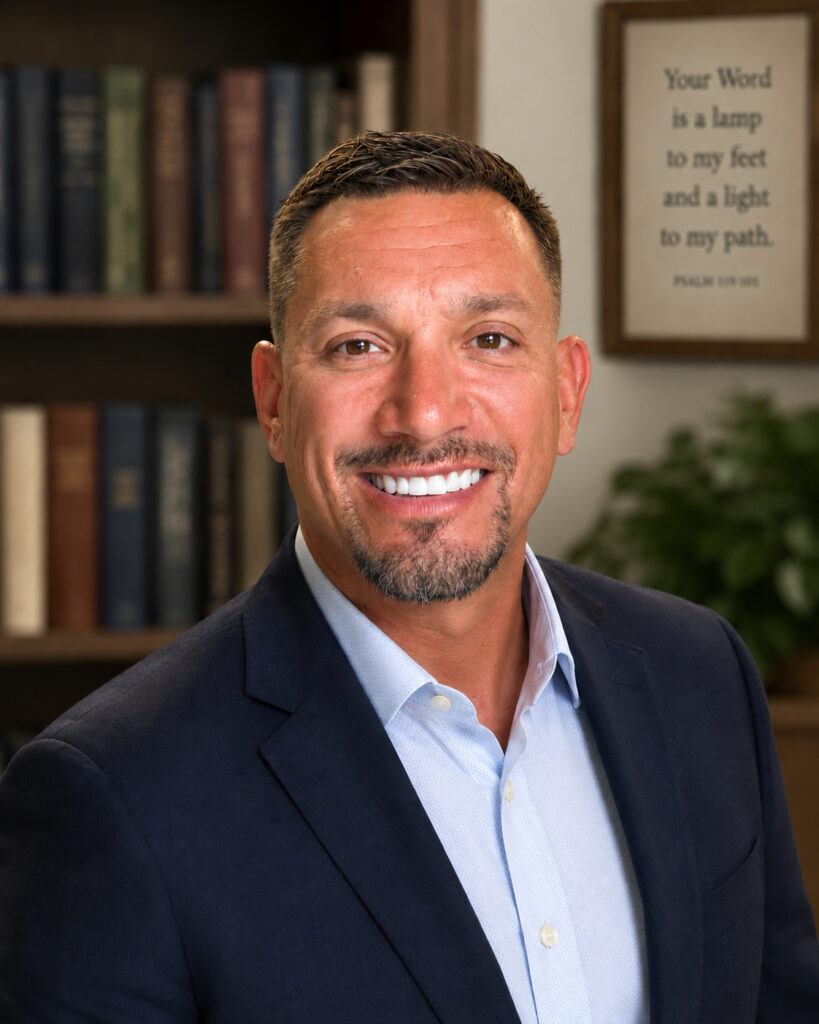
Apostle Kyle Meyer D. Divinity
Founder

Jason L. Welsh,
B. Th, M. Th, D. Div, Hon. D. Th
Senior Advisor

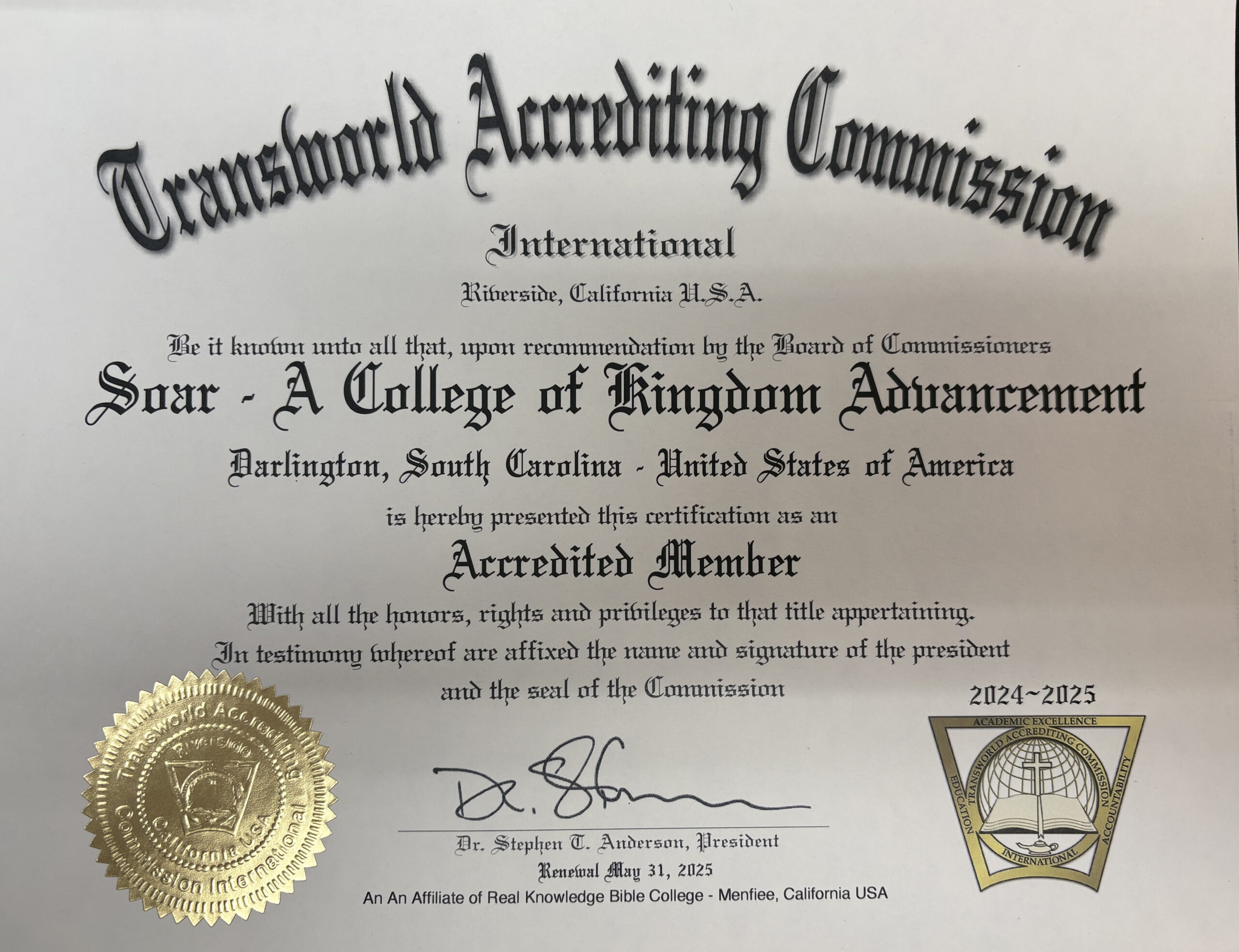
U.S. Department of Education Accreditation

USDE accreditation is not necessary for the theological degrees in which we offer. Individuals seeking employment in government-licensed positions such as public school teachers, state-licensed psychologists or psychiatrists, and non-church-related counselors will more than likely need USDE accredited degrees. Generally speaking, people working in ministry positions do not need a USDE accredited degree. If you are pursuing education at RKBC with the intent of obtaining employment or for some other reason, you should check with that organization BEFORE applying for enrollment in RKBC. RKBC assumes no liability of any kind.

Separation of Church and State

• There is secular education and there is religious education.
•Religious schools are not legally required to become accredited
•Secular schools seek secular education, and sacred schools receive sacred or ecclesiastic accreditation—each by their own peers.
•Religious institutions need no secular accreditation because they offer no secular degrees.
•Secular accreditation associations in turn are recognized by governmental agencies. They trace their authority back to the capitol of a country, like Washington, D.C.
•Religious accrediting associations are recognized by the Church of Jesus Christ, which has no supreme central office on earth. Our authority is derived directly from Heaven.
•Civil and religious interests are different and have separate realms of jurisdiction.
•The State is not superior to the Church. The Church need not wait for approval from the secular world.
•Civil agencies should not be dictating standards of Christian education, any more than a police officer should be directing the worship of God.
•Theological Seminaries should not be accredited by accrediting associations that are “recognized” by an agency of the federal government, because it is contrary to the Biblical principle of “Separation of Church and State,” indicated by Christ when He said, “…Render unto Caesar the things that are Caesar’s, and to God the things that are God’s…” (Mark 12:17).
•What business does a Christian educator have going to the world of unbelievers for recognition and acknowledgement when 2 Corinthians 6:14 clearly tells us, “Be ye not unequally yoked together with unbelievers: for what fellowship hath righteousness with unrighteousness?”
•A Christian educational institution securing accreditation from an association which is attached to a governmental agency is a Scripturally condemned and unholy union as James 4:4 says, “Ye adulterers and adulteresses, know ye not that the friendship of the world is enmity with God?”
 
Why not become accredited by the Department of Education? In many cases the government’s Department of Education is not qualified to accredit a private school, such as a Bible School, because the DOE is secular and a Bible or Christian School is spiritual thus our standards are not secular and cannot be judged by secular standards!
 
As we find in 1 Corinthians 2:14 “But the natural man receiveth not the things of the Spirit of God: for they are foolishness unto him: neither can he know them, because they are spiritually discerned.” Therefore a state agency is not able to determine if a spiritually directed learning institution is meeting the mandates of the Bible!
Accreditation has many benefits for both educational institutions and students, but it is neither a guaranty nor is it the sole criterion of an excellent education. Every accredited institution was once unaccredited. For example, Dallas Theological Seminary (DTS) was founded in 1924 but was not accredited by SACS until 1969, long after the graduation of notables such as Dwight Pentecost, Charles Ryrie, and Chuck Swindoll. Dallas Theological Seminary was not accredited by ATS until 1994, but its excellent education before then is unassailable.
 
Where promotional material for an unaccredited institution consists of an advertisement in a periodical published by a person or entity that is not affiliated with the unaccredited institution, the disclosure required in subsection (a) may be abbreviated to state as follows NOT ACCREDITED BY AN AGENCY RECOGNIZED BY THE U.S. SECRETARY OF EDUCATION. The disclosure required under this subsection shall be made in a type size as large or larger than any other text in the advertisement.